Friends often ask me to write about the music that I think they should listen to. They probably want me to stop talking to them about these albums so they think telling me to write about it will get me to shut up! There were so many albums to be grateful for in 2016. Here are the albums (in order) that were my personal favorite. I put a lot of links to cool videos and performances in here, so if you have the opportunity I would recommend setting aside some time with some ear buds and a favorite beverage.
10. Hamilton Leithauser/ Rostam- I Had a Dream that You Were Mine
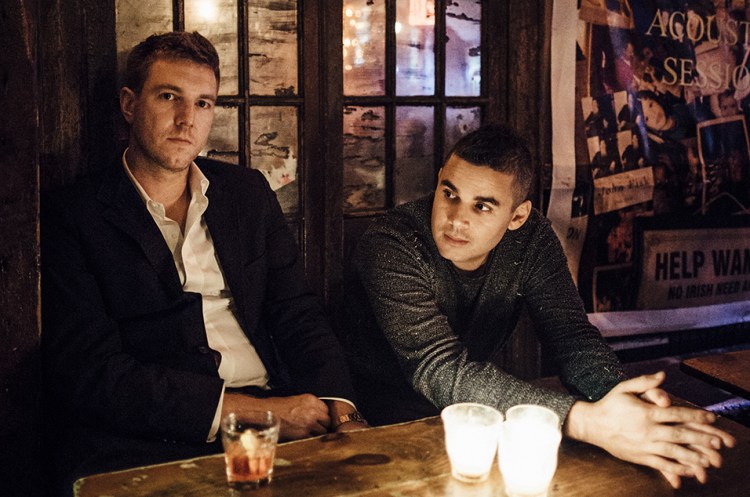
As someone who tries to stay up on when big albums are being released, this particular album was a pleasant surprise. I would have been salivating over the idea of a new Vampire Weekend album and I would have been almost as excited about a new Walkmen album. Instead, the lead singer of The Walkmen (Hamilton Leithauser) and the producer/ multi-instrumentalist from Vampire Weekend (Rostam Batmanglij) joined forces to create an album that combines seemingly incongruent musical styles and traditions into something that sounds effortlessly charming. It’s hard to listen to this album without having a huge smile on your face.
Rostam brings all of the sounds and influences that made Vampire Weekend special (Wes Anderson, rockabilly, Paul Simon etc. etc. etc.) and Leithauser adds a voice that is a riveting alternative to Ezra Koenig (lead singer of Vampire Weekend). Leithauser uses his voice in a way that unpredictably vacillates between soft and syrupy to loud and rough. It keeps listeners on their toes and I can imagine the album possibly sounding TOO chill without it.
The album mostly tackles topics like love and existential disorientation with a genericism that allows the listener to scream and muse right along Leithauser. The track list is one standout after another, but my favorite is probably Rough Going (I Won’t Give Up). The lyrics are immensely cathartic mostly because of how open ended they are. When Leithauser screams “I won’t give up!!!” over and over again on the chorus the listener is invited to attribute whatever meaning might fit their current state of mind. Combine that urgent sentiment with the chill piano vibe provided by Rostam as an accompaniment and you have a pretty special listening experience.
Watch their video for “A 1000 Times” here.
9. A Tribe Called Quest- We Got if From Here- Thank you 4 Your Service
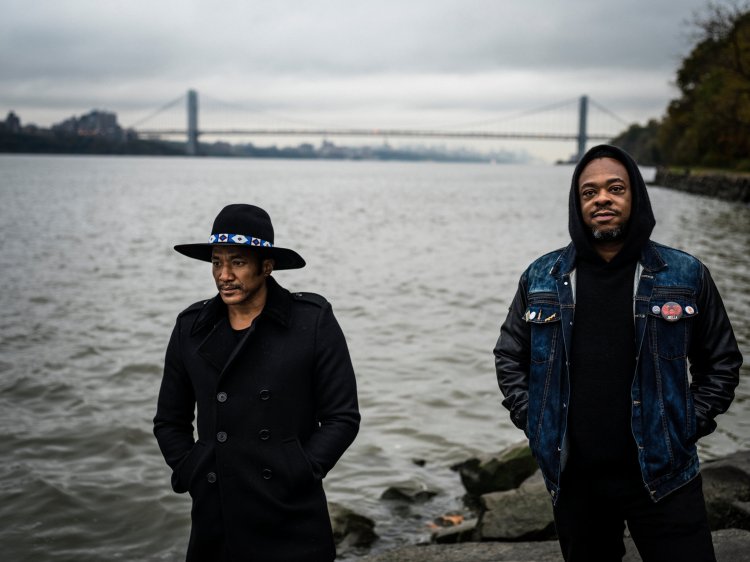
When I was a junior in High School I bought my first ATCQ album. I had read somewhere that they were an important rap group. At the time I didn’t know anything about The Low End Theory or Midnight Marauders (now two of my favorite albums of all time). The album I purchased in 1996 was called Beats, Rhymes, and Life; definitely not their most memorable record, but it was special to me because it was my first encounter with this one-of-a-kind group.
Looking back, I think what stood out immediately about ATCQ was the chemistry between Phife Dawg and Q-Tip. Q-Tip’s voice is smooth and high-pitched, while Phife’s is rough and aggressive. Even when Q-Tip is trying to sound aggressive he sounds pretty non-threatening, and even when Phife is trying to sound sweet he still sounds intimidating. All that to say- once I was exposed to The Tribe I was an instant fan.
Unfortunately- the group has not made an album in over 18 years. Why? The answer is complicated. Phife Dawg had health problems, there was infighting in the group, and it seemed like none of the members felt a huge urgency to create something together. The struggle is depicted in the critically acclaimed documentary that was released several years ago ALSO called Beats, Rhymes, and Life.
Recently rumors began circulating that ATCQ was working on a new album, but soon after that it was reported (last March) that Phife Dawg had died due to “complications with diabetes”.
When the new album (We Got it From Here…Thank you 4 Your Service) was finally released it revealed a group that still maintained its chemistry while managing to evolve and mature along with its members. My first encounter with the new material was when they performed “We The People” on SNL. It was hard not to get emotional when a giant poster of Phife was lowered during his rap.
The new album is grittier and rougher than albums past, but the group stays close to its jazz inspired roots. It’s timely, political, inspiring…but mostly it is a Tribe album…which is to say- it’s cool. The chemistry that attracted me as a junior in High School is still there, but there is a new urgency and focus on the part of Q-Tip and Phife Dawg. On “We The People” Phife Dawg asks, “who can come back years later; still hit the shot?” After listening to the album the answer is obvious.
Watch their video for “We the People” here.
8. Nick Cave and the Bad Seeds- Skeleton Key

As with ATCQ a tragic death occurred in the middle this album’s production. In this case Nick Cave’s 15-year-old son, Arthur, tragically fell off of a cliff and died. Cave’s work has always felt dark and morbid, but this new album feels like those qualities are understandably ratcheted up.
On Skeleton Key, Cave and his band use synthesizers and orchestration that, from the album’s opener (Jesus Alone), creates a heavy and even slightly sinister mood. It grabs the listener’s attention and announces that the album intends to disrupt rather than sooth. The chorus of “Jesus Alone” depicts a character (Jesus?) “calling” a diverse group of people and later inviting the called to “sit together until the moment comes”. Is this purgatory? Is it the after-life? The song, and the rest of the album, are otherworldly. It’s hard to listen passively.
If you haven’t experienced a Nick Cave album before, his voice and style take some getting used to. He’s not interested in perfect pitch or making his voice sound like a pop singer. He goes for authenticity and feeling. His singing is often low, foreboding, and even slightly quivery. However, on other songs he sings with tender vulnerability (albeit slightly off –key). If you can get past the “weirdness” (read: “unique”, “original”, “creative”, “one-of-a-kind”) of Cave’s style the pay-off is a cinematic experience. The album is like a surreal Kubrick-like film narrated by a mad poet trying to articulate the mysteries of life and death and love. What more could you ask for!?
By the time the penultimate song (Distant Sky) arrives, the heart wrenching and tragic beauty it conveys feels earned. The song almost reminds me of a song you would hear during the credits of a Lord of the Rings movie. That is to say- it’s a quiet prayer that provides a chance to reflect in a way that honors the rest of the album.
Skeleton Key is an album that, for me, has the potential to help people have an experience that takes them away from the struggles of the everyday and I think that is actually very much needed right now. It feels odd to say that it’s morbidity can actually be healing. We need art to help us engage with real life here and now, but we also need art to help us get in touch with the depths of our souls. Skeleton Key reminds us that life is precious and there is more going on around us, spiritually, than we are often inclined to consider.
Watch their super weird and spooky video for “Jesus Alone” here.
7. Leonard Cohen- You Want it Darker

On November 7th, Leonard Cohen died in his sleep after a bad fall. He was 82 and had just completed his 14th album- You Want it Darker.
Being 82, it makes sense that death and mortality were on Cohen’s mind as he worked on the album. He wrestles through his complicated feelings about God and faith and attempts to say goodbye with dignity. I’m not sure if Cohen is a Christian, but he has always employed the language of faith (and specifically the Christian tradition) to speak about the human experience. On You Want it Darker he is both heavy handed and playful lyrically and musically. He seems to have come to terms with mortality and is able to accept it despite his obvious love to question everything.
Cohen’s voice is deeper and more gravelly than ever, but somehow the age makes the music feel wise and comforting. As opposed to some of his other gruff voiced contemporaries (Bob Dylan and Tom Waits for example), Cohen’s voice feels like a warm blanket once you get used to is. This helps his laments and lingering anger go down smooth. It also makes his earnest sentiments about love seem so much more authentic than your everyday musician. Despite Cohen’s cynicism he is still able to revel in the simple joys of love.
This album helped me process some of life’s heaviest questions this year. Cohen’s “voice” (literally and metaphorically) is extremely “punk rock” in it’s brazen honesty, but the music is so chill and smooth that it helps to bring the listener to a place of quiet contemplation. In that sense You Want it Darker (along with many of Cohen’s past albums) feels like going to church or praying…or sitting in a chapel. It’s a parting gift from one of our greatest artists.
While there are no videos or live performances from this album you can check out a really great interview Cohen did for this album here.
6. Kanye West- The Life of Pablo
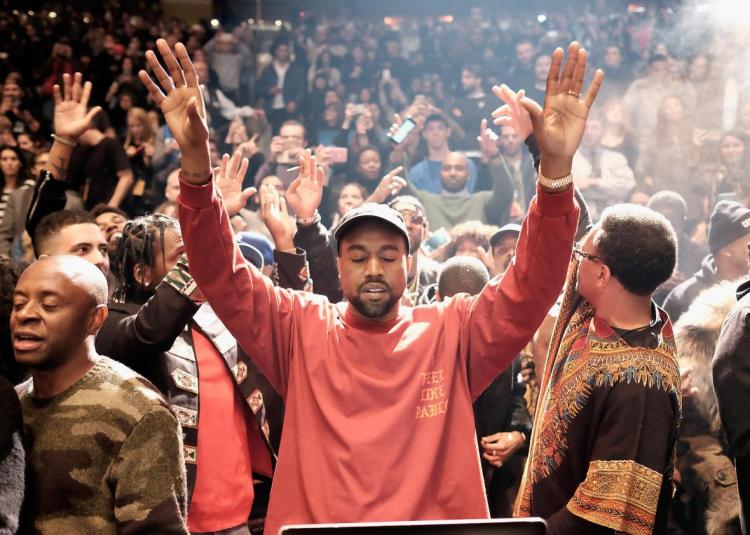
For me, no other album was more anticipated this year than The Life of Pablo (formerly So Help me God, formerly SWISH, formerly WAVES…Kanye was aggravatingly public about his indecisiveness when it came to naming the album). Kanye also appeared to take a twisted type of pleasure in toying with his fans regarding when the album would be released. He eventually previewed the album during a presentation of his third clothing line at Madison Square Garden. Fans got to hear the music, but we weren’t quite sure if we were hearing the final version of his completed album. Turns out we weren’t. After previewing the album, Kanye went “back to the lab” with Chance the Rapper and several other collaborators to continue to fine tune several of the songs. This hinted early on of an album that was pretty unruly.
When the album was finally released the listening experience delivered moments of bliss in fits and starts. Some of Kanye’s most beautiful sonic and lyrical creations to date are interrupted by moments that are equally lazy and crass. TLOP is truly inspired and truly confounding…which is to say- it’s a lot like Kanye. The opening song, Ultra Light Beams, is completely unique in terms of the Kanye canon. It’s quiet, meditative, earnest…patient even. It features a gospel choir, several perfectly cast guest performers and actually very little Kanye. It’s essentially a prayer about needing and trusting in God during a dark night of the soul and it hints at the album Kanye had been promising for months: “a gospel record with swearing.” What happens after “Ultra Light Beams”, however, is anything but a gospel record. There are a few more moments where Kanye alludes to his Christian faith, but the rest of the album is an exercise in random free association accompanied by various musical mosaics by one of the best music producers working today.
There really is not a dull moment on TLOP. I listened to the album exclusively for almost a month. Kanye is a genius and he always delivers an entertaining and provocative product. The beats are new and exciting, the crassness, while confounding, is also kind of funny and silly. The highs are very high. The second half of “Famous” might be my favorite Kanye creation ever. However, the album is missing the tightness of past Kanye albums. Kanye has always delivered a product that feels cohesive with a manic intentionality and thought. Each time he puts out an album he seems to dabbling in new musical styles and his albums are an opportunity for him to highlight that. My Beautiful Dark Twisted Fantasy (his most critically praised album) was bookended by songs that seemed to articulate a thesis statement of sorts for what he was trying to communicate. On TLOP he is all over the place and each song feels like it belongs on some other album. In that sense it almost feels like a mixtape. If the album was filled with more songs like “Ultra Light Beams” it would probably be my favorite album of the year. It’s still an impressive album, it’s just not Kanye’s best.
Watch Kanye perform Ultra Light Beams on SNL here
5. Bon Iver 22, A Million

I remember where I was the first time I listened to each of Bon Iver’s 3 albums. I was on a back porch in Sunriver the first time I heard For Emma, Forever Ago. I was getting on 405 South from 8th Street in Bellevue the first time I heard Bon Iver (Bon Iver’s self-titled Sophomore album). And I was on driving on the Pacific Coast Highway near Santa Barbara the first time I heard “22, Over SooooN” (the opening track from the new album). At that point I did what any rationale music lover would do- I extended the drive so I could listen to the song 10 times in a row as the sun set. I think the reason I remember each of these experiences so vividly is that a Bon Iver album is a sort of meditative and transcendent experience wholly different than most other albums; probably because of Justin Vernon’s soaring falsetto and his unique ability to make a simple set of chords and a voice sound so weighty.
22, A Million is an exciting next step in Bon Iver’s artistic evolution because it includes these qualities that have made the project so special while also adding a ton of weird electronic experimentation. The album aggressively explores what it means to be a spiritual person made of flesh and blood in an increasingly digital age. The first song (“22, Over SooooN”), to me, introduces an existential and religious dilemma that sets the tone for the rest of the album. The singer is “waiting at the station” (this could be a metaphorical train station or it could be one of the stations of the cross…this line is an example of the way the album constantly plays around with religious words to invoke spiritual longing). It’s also appropriate to tie the number 22 to Psalm 22, which asks God “why have you forsaken me”? Indeed, the lyrics throughout the album invoke a reaching-out-to-God amongst a computerized landscape. “666” (another obvious religious allusion) ends with Vernon repeating “I’m still standing in the need of prayer” and in “29 Stafford APPTS” he chants “canonize, canonize”(a possible reference to sainthood or the canonization of a work of art). The song titles (a mash up of numbers, religious inferences, geographic locations, and nature) indicate that the album intends to explore how to make sense of what makes us human now in the modern world.
It would be an understatement to say that one could take a Master’s level course on all the symbolism and cryptic lyrics that are thrown into this project, but the illusive nature of these songs is exactly what makes 22, A Million such a rich and multi-layered experience that invites numerous listens. If it wasn’t for several other stand-out albums this year, 22, A Million could have been my favorite album. It’s a contemporary work that also feels timeless. Also- the obsessive intentionality put into the final product feels like the complete opposite of The Life of Pablo. The consumer feels honored and valued instead of messed with. “OOOOO Million” closes the album with what feels like a prayer; it’s a graciously quiet moment of reflection after a complicated and somewhat taxing journey. At the end of each set of verses Vernon sings “if it’s harmed me, it’s harmed me, it’ll harm me, I’ll let it in”. After spending time wrestling through life’s biggest questions this feels like a moment of serenity. It’s a coming-to-terms with the pain life inflicts and finding peace in the midst of it. It’s a wise and cathartic sentiment to hold onto at the end of a year that felt pretty darn harmful.
If you want to have your mind blown by a live performance of “CrEEks” watch this. Start it at 1:23 though. The beginning is just him setting up his weird auto tune gear.
4. Frank Ocean- Blonde
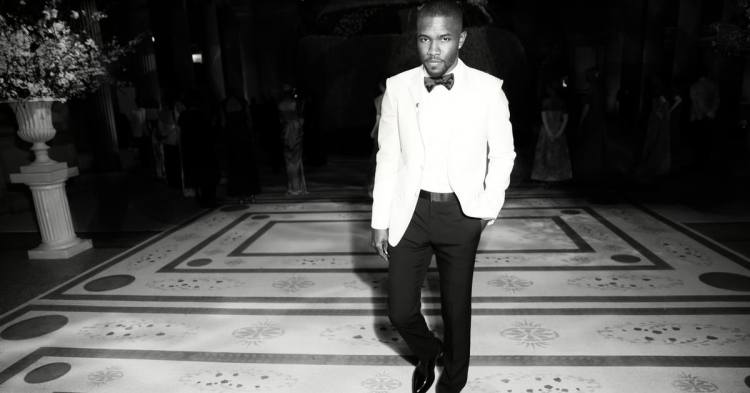
Fans have been waiting for a new Frank Ocean album for a long time (4 years to be exact) and Blonde delivered a truly riveting experience that pushed Ocean’s avant-garde version of R&B to new limits. The most compelling and consistent element to anything Frank Ocean is a part of is his voice; it’s smooth and soulful with a massive range. That makes it all the more cool and risky when Ocean decides to so aggressively toy with his vocals on Blonde. Sometimes the pitch is cranked up to make him sound cartoonish; sort of like the 4th member of Alvin and the Chipmunks, at other times it’s slowed down to make him sound like Dr. Claw or Darth Vader under water, and in other songs it’s just given a twinge of distortion or reverb. However, throughout the album Ocean’s “regular” singing voice bursts in just in time to release the tension of the experimentation giving the listener a rewarding release. The most obvious example of this is the opening track cryptically titled Nikes. This is the first song on an album that people have been waiting years for and the first half of the song features dueling high and low distortions of Ocean’s voice. By time he bursts out in the second half with his real voice singing “we’ll let you guys prophecy!”, it’s extremely hard not to stand up and start cheering.
However, Ocean’s voice is just the tip of the iceberg when it comes to the experimentation on Blonde. There is an R&B core to Ocean’s style, which is present in gentle wisps and threads, but there are also influences from classic rock, punk, hip-hop, electronica, Wes Anderson, and a bajillion other more subtle influences that pop up in the lyrics and other isolated interruptions. The end of Ivy, for example, is completely disrupted my someone (most likely Ocean) screaming in the aforementioned chipmunky voice, which is freaking disorienting. Two songs later, on Solo, Ocean delivers one of the most easily digestible tracks on the album with just his voice and an organ. It’s soulful and pleasant, but because of the songs leading up to it, one can’t help but brace for a potential audio glitch to break the spell. My absolute favorite moment on the album is on the back half of the song Self Control. After a charming first half that has Ocean singing over an electric guitar about the struggles of unrequited love he transitions into a gorgeous multi harmony plea for his lover to stay with him for a night (side note- the 808 sample used in this part of the song is a perfect example of Ocean’s proclivity for adding left-field musical elements that somehow totally work).
The lovers that Ocean are singing to on Blonde are most likely other men, but that isn’t made explicit and that’s what makes these songs so vital. Many articles (like this one: (http://www.clashmusic.com/features/panderings-pan-sexuality-hip-hop) have discussed Ocean’s pansexuality; that is someone that is completely “gender blind” when it comes to sexual preferences. Writing through this lens, Ocean can’t help but create music that describe situations that are often sexually ambiguous. The songs on Blonde don’t merely sound good and push the envelope musically– they also give voice to the black LGBTQ community (see also Dev Hynes of Blood Orange…an artist that almost made this list). Black male hip-hop and R&B artists have been notoriously homophobic throughout history and while that’s slowly changing, albums like Blonde have the potential to open minds and hearts to people with a different sexual orientation. And I’m not a black gay man, but I imagine that Frank Ocean’s music would be extremely helpful and cathartic if I was.
Blonde is a sonically rich, lyrically sharp and playful, emotionally moving piece of art that will surely be an American classic in time. For me it was an album that challenged my ears and my world view. That’s not to say the album is work. Blonde is nothing if not fun. The album is the complete opposite of monotonous. Every song sounds different and unique. And Ocean seems to have an uncanny ability to know when the listener needs a moment of quiet uninterrupted reflection; no song better displays this sensitivity than Godspeed (the second to last song on the album). The song is a benediction of sorts and obviously a prayer for a past lover, but it’s cool to think of Ocean singing them to whoever might be listening. “Wishing you Godspeed, glory!”, Ocean sings, once again over a quiet church organ. In the context of the entire album, it feels like a truly honest and hard earned blessing that has come through brave self-reflection. Ocean knows that he no longer needs the person he is singing to and can genuinely let go despite the presence of real grief and sadness. I loved this album for its cryptic and nuanced vibe, but loved it equally for moments like this where the clouds parted and a clear message of grace burst through.
There are very few vids of FO performing live, but here is a rare gem.
3. The Music of Steven Universe

When it came time to share what I was thankful for during Thanksgiving dinner this year, my answer was easy: Steven Universe.
For years I had seen commercials for Steven Universe during commercial breaks between Adventure Time episodes (a Gronholz family favorite for almost 4 years now) and they always made the show look pretty lame. It looked like a show about an annoying kid with an annoying voice who had some sort of weird super power. It all seemed like another obnoxiously loud and gimmicky Cartoon Network show that was thrown together just to get more kid viewers. My impression could not have been more wrong.
At the beginning of the summer I read a review of the show somewhere that said “Steven Universe is the most progressive kids show ever created.” That really got my attention. One evening I suggested to my kids that we give the show a try and they looked at me with the appropriate amount of skepticism; after all, this was the show that all of us had been rolling our eyes at when we saw the commercials. We watched the first few episodes and we were hooked. We plowed through a little over 60 episodes in the evenings during our vacation to Santa Barbara, finished the other 118 episodes when we got back, and have already re-watched the entire series.
It’s hard to convey to the non-converted how truly rich and powerful this show is. For me personally, it is a story that is right up there with favorites like Harry Potter, Star Wars, or Narnia. The mythology of this show (a story about alien invaders that decide to turn on their own kind to save earth) is utterly unique and the characters are so 3-dimensional and endearing that it compels fans to want to stay in this “universe” as often as possible. In C.S. Lewis’ review for The Lord of the Rings he wrote, “here are beauties which pierce like swords or burn like cold iron; here is a book that will break your heart.” The same could be said for Steven Universe. The emotional landscape and maturity of this show is often times more profound than anything I can find on adult shows. It’s really too bad that we even have labels for media like this. Steven Universe is a “kid’s show”, yet for those with an open mind it has depth and wisdom to offer even the most pretentious of adults would find compelling.
But this is supposed to be about music!
When I saw that Rebecca Sugar was the creator of Steven Universe it was the final push I needed to watch this show. Rebecca Sugar was a significant contributor to Adventure Time. My kids and I were so enamored with the music on that show that we often went to the internet to find out who was writing these catchy and lyrically touching songs. Well- we found out that most of our favorite songs (often times sung by Marceline the Vampire Queen) were written by Rebecca Sugar.
In Steven Universe, Sugar is able to inject her unique musicality into her stories which comes in the form of punk rock, musicals, 80’s new wave, 8 bit video games, and plain old hipster ukulele. Each song feels like a whimsical free-form burst of creativity that perfectly fits the narrative of the show and gives fans musical references to remember their favorite episodes. The episode about the main characters traveling to the moon together is the episode where Steven sings Peace and Love (On the Planet Earth and the episode about Steven, Pearl and Amethyst battling the “Heaven Beetle” is the episode where Steven Sings Giant Woman.
As with any musical, these songs become more three dimensional when put in the context of the story and their characters, but they are still stand alone songs that anyone can enjoy (My Shot from “Hamilton” is another example of a song that people learned to enjoy outside of it’s original context this year). Here are a few standouts from Steven Universe (but they really are all standouts).
Pearl sings It’s Over, Isn’t It? (check out the awesome animation!).
Garnett (the show’s Gandalf, Aslan, and Dumbledore…and my favorite character) sings the shows two best songs: Here Comes a Thought and Stronger than You.
Greg (Steven’s Dad) sings Just a Comet
And here is the extended version of the show’s awesome theme song.
I didn’t have anything like this show when I was growing up. I had Muppet Babies and Mr. Rogers and Sesame Street (I’m trying to think of shows that were entertaining, but taught me something too). Steven Universe is like combining Dragon Ball Z with Mr. Rogers and Hayao Miyazaki.
I don’t think this show is just for kids though. I think it’s one the best shows ever created period and I think it’s unfortunate that we have these categories of “kid’s shows” and “adult shows”….or adult music for that matter. If you have a family I really couldn’t recommend Steven Universe enough.
In closing- here is a clip of the show’s creator (Rebecca Sugar) singing the enchanting Love Like You from the show’s closing credits.
2. Beyonce- Lemonade
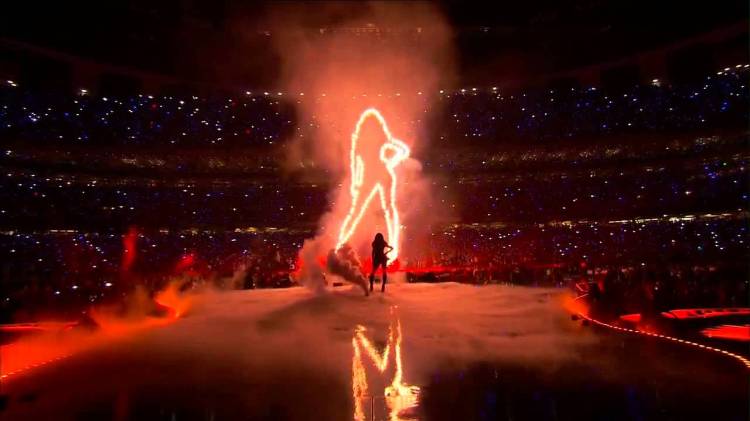
In the realm of pop culture I often think about how there is a lack of inspiring marriages depicted. I think of Bill and Claire Huxtable, Eric and Tammy Taylor, and that’s about it (let me know what I’m missing here). When Lemonade was released I was thrilled to experience another Beyonce visual album. I knew it would be impeccably produced and completely entertaining. However, I was not prepared for the depths that Beyonce was willing to journey through to explore marriage. This is an album that takes apart a marriage and examines big thoughts about fidelity, honesty, race, spirituality, lineage, autonomy, forgiveness, and love.
The premise of the album is that Beyonce has discovered that her husband (Jay-Z) has cheated on her. What follows is a pop-music version of the various stages of grief and processing that any marriage must go through to survive scandal. The visual album gives you chapter titles like “Anger”, “Accountability”, and “Resurrection” (click here for the full list of chapter titles and their song descriptions) that are headlines for the emotional landscapes Beyonce wants to invite her listeners to explore with her. Somehow these visual cues don’t come across as heavy handed or trite. I think that probably has something to do with the rawness and the realness of each song. I don’t think Beyonce was going for subtly in this album and that was refreshing for me. Looking back at this list of favorite albums this year there were a lot of good artsy albums that provided plenty of nuance and mystery. But sometimes we want pop music to be more obvious and help us get in touch with our own emotional lives in the process.
No song on the album does this better than Don’t Hurt Yourself; Beyonce’s completely unhinged and raw expression of how she feels about being cheated on. Beyonce has always trafficked in songs that empower women, but Don’t Hurt Yourself makes songs like Single Ladies and Irreplaceable seem like nursery rhymes. This song is crass and aggressive and bashes you over the head. Also, thanks to some assistance from Jack White, it draws out a bonkers rock diva side to Beyonce that totally works.
For me, as a listener, Don’t Hurt Yourself was so much more than merely Beyonce reacting to Jay-Z’s infidelity. I thought it was the inevitable moral reckoning that hip-hop had coming. For some reason I instantly thought of Jay-Z’s classic song Big Pimpin. This was a huge hit for Jay-Z in the early 2000’s. It’s a song that was blasted from every young/ dumb college kids’ car as they drove around hoping to be just a little bit like Jay-Z. The song opens with the super classy lines: “You know I thug em, fuck em, love em, leave em Cause I don’t fuckin’ need em.” The lyrics get worse from there. I remember the video depicted Jay-Z and his business partner (Damon Dash) dancing around half naked women and casually showering them with champagne: a disturbing and poignant image of our constant objectification of women. Who will stand up for these women? Where is the righteous indignation? We need look no further than the woman who actually married Jay-Z. In Don’t Hurt Yourself, Beyonce stops mid-track to declare “I am the dragon breathing fire”, and proceeds to obliterate every disgusting, misogynistic, hypocritical creep that has ever created or enjoyed songs like Big Pimpin. Fire is the appropriate imagery here because Beyonce leaves behind a scorched earth.
This makes the rest of the album feel more authentic and rewarding. The listener would understand if the songs that followed Don’t Hurt Yourself dug further into feelings of disgust and anger. However, after some songs that describe apathy and grief, Beyonce begins to offer powerful songs about hope and redemption. Can a marriage survive betrayal, deception, and heartbreak? As a Christian, my hope is that it can. I don’t get much out of saccharine “Christian pop” sentiments about fidelity and commitment because so little of that genre seems to know much about the real pain and heartache described in Lemonade. The idea that “love conquers all” doesn’t have a ton of back-up in our songs and popular media. Love is either something that is abandoned at the first inkling of discomfort or betrayal or is something that is substituted with “fulfillment” or “happiness”. I want to believe that love is stronger than that. I want to believe that love could heal my own marriage in a crisis, and I especially want to believe that love can bring our divided nation together. According to Lemonade, it can.
At the end of the album Beyonce finally blesses the audience with a song called All Night about the healing power of love. In the song she sings, “True love breathes salvation back into me. With every tear came redemption.” Separated from the narrative of the album this would feel like a trite pop-music sentiment. However, in the context of Lemonade it is a hard earned and powerful declaration. By the time I got to this song in the visual album I was sobbing into my hands. We need (I need) hopeful works like this that are rooted in the very real struggles of marriage and commitment. The entire album articulates a substantial and durable vision of love that the world really needs.
It also shows the creative strength of human agency when we choose love over enmity. This is actually the mission statement of the album. “Lemonade”. In the visual album the audience is treated to a toast given by Beyonce’s Grandma Haddie at, what appears to be, her 90th birthday party. In her toast (as Beyonce’s daughter, Blue Ivy watches from the audience) Haddie says, “I had my ups and downs, but I always find the inner strength to pull myself up. I was served lemons, but I made lemonade.
Not only is this a beautiful way to honor what Beyonce has learned from her Grandmother, but it is ultimately a testament to the strength and resilience of black women in America. Midway through Don’t Hurt Yourself Beyonce inserts a clip from Malcom X that states, “the most disrespected person in America is the black woman. The most unprotected person in America is the black woman. The most neglected person in America is the black woman.” By the time the song Formation arrives at the very end of the album (which was the first single that hinted Lemonade was on the way in the first place) Beyonce’s new artistic identity as a champion, not just of women, but specifically black women, feels credible. In Lemonade she has firmly embraced her identity as a black woman by reaching back to her roots to find the fortitude to stand on her own two feet. She doesn’t enter back into her marriage because she is coerced by a man, but because she has made an autonomous decision as a strong intendant woman that is rooted in her beliefs and family heritage. As she draws on the power of these resources she ultimately finds an inner resilience summed up in a simple refrain meant to rally and unite black women everywhere: “Okay, ladies, now let’s get in formation!” It’s a stand-out line in an album full of stand-out lines and one I hope continues to reverberate into 2017.
1. Chance the Rapper- Coloring Book

When I saw Chance the Rapper perform Blessings on Jimmy Fallon I was not in any way prepared for his blatantly Christian message complete with a gospel choir and a crumbling replica of The Walls of Jericho. Chance had alluded to his Christianity in past songs (see Sunday Candy by Donny Trumpet and the Social Experiment), but this was an unabashed declaration that Chance “don’t believe in kings, believe in the Kingdom.” The last time I had felt this excited about a musician was when I saw Kanye’s Jesus Walks videos almost 15 years ago.
And speaking of Kanye, he had promised fans a “gospel album with swearing” this year. As I’ve already discussed, Kanye failed to deliver on that promise, but it seems like he has passed the “swearing gospel musician” baton onto Chance. After all, Chance said himself during his guest verse on Ultra Light Beams that he’s “Kanye’s best prodigy.”
Let’s stop for a second and think about this idea of a “gospel album with swearing”. I’m discouraged that there even has to be this distinction. Specifying that there will be swearing on a gospel album should feel as novel as saying there will be cheese included on a hamburger. Maybe someone doesn’t prefer cheese on a hamburger or they’re lactose intolerant, but it shouldn’t be some big thing. When I hear Kanye say he’s making a gospel album with swearing I interpret that as him wanting to make a Christian album that uses real everyday language to communicate the gospel. This is important because the gospel needs to apply to “everyday people” and “everyday people” swear. Everyday people (okay I’m starting to sing that old Sly and the Family Stone song now) also live lives that are complicated and full of struggle. Often times gospel albums (or Christian pop songs) hint at “evil” and “sadness”, but can’t seem to find the imagination or courage to name the source of these struggles. As upbeat as Chance’s songs are, they also address topics like drug addiction and gang violence. To me, this makes his joy-filled audacious faith claims (when the praises go up, the blessings come down!) seem more applicable.
And Coloring Book (or Chance 3 as it is often referred to) is packed with joy-filled audacious faith claims. The album starts with an uplifting and fast-paced ode to the power of music (backed by Kanye and The Chicago Children’s Choir). Later in the album, on songs like “Angels” and “Finish Line/ Drown”Chance raps about how his faith in Jesus gives him courage and hope. On “How Great” he has a choir sing “How Great is our God” for over two minutes before contributing his own amusing verse followed by J-Electronica (one of many examples of the street cred Chance has with other rappers).
Coloring Book is full of musical partnerships that shouldn’t work on a “gospel album”. Kirk Franklin is on “Finish Line/ Drown”, but other than that it feels like Chance snuck these artists in through the back door. There’s Justin Beiber, T-Pain, 2-Chainz, Lil Yachty, Young Thug and many other artists that I assume are underground Chicago rappers. One of my favorite songs (all of them are favorites really) is when D.R.A.M. shows up mid way through the album just to sing “you are special” over and over again.
This is quiet possibly my favorite Christian album I’ve ever listened to period. As someone that grew up on Christian music I often find myself mourning that I don’t play more “Christian” music around my house. Unfortunately some of it is so cheesy (my opinion). My favorite part about this album is that there are at least 5 songs that are completely kid appropriate. What made this album so special for me this year was that it got my family singing around the house together, “I’m gon’ praise him, praise him till I’m gone!.”
Watch Chance perform “Finish Line/ Drown” on SNL. And listen for the part where he sings, “Jesus it’s your birthday! Happy birthday, Jesus!”
 A Fusing of horizons